
Poler Dizzy Series 2a: The Lie, Dizzy & Definitions from Polers
Maze | OCT 16, 2026
#poledizziness #biologicalfearresponse #holdingyourbreathinthepole #hourglasssyndrome #psychologicaleffectsofpoledance
The Poler Dizzy Series ( 2a):
The LIE, Dizzy & the Definitions
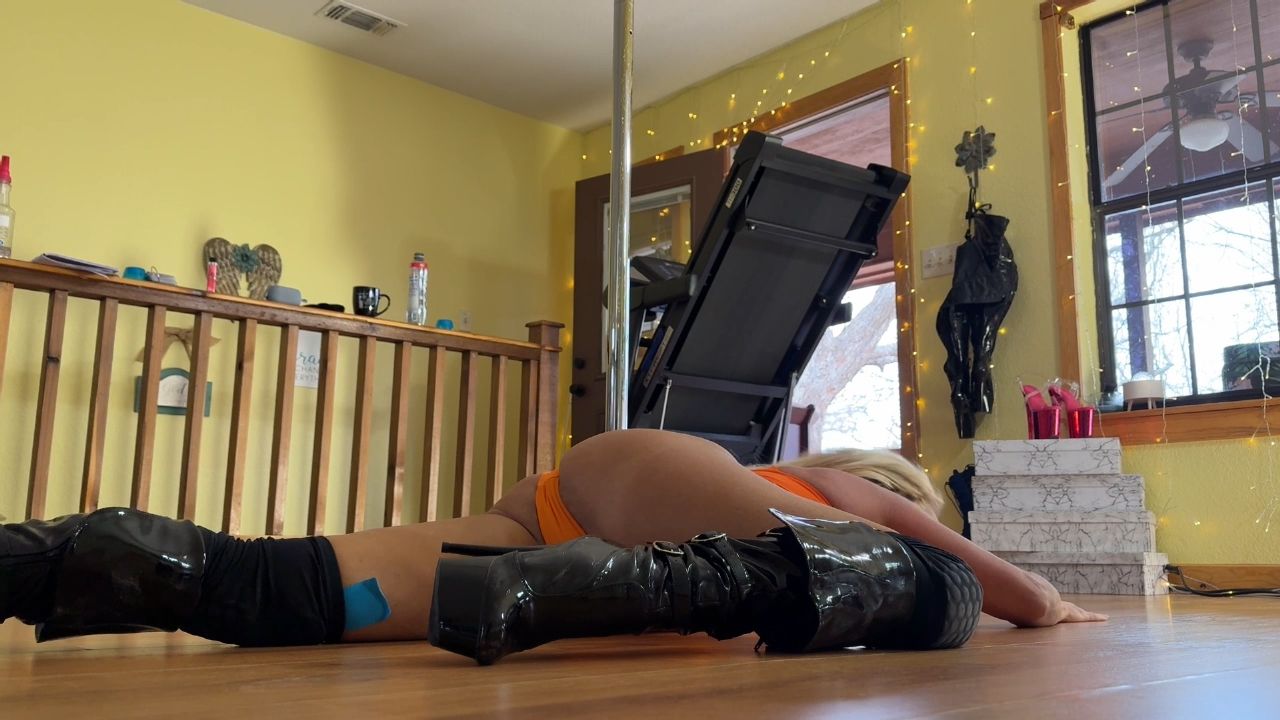 Pike to Shoulder roll to fish flop to climb to invert to handstand - oops, I'm swimming!
Hot Topic Index:
The Poler Dizzys Part 1
2a: What polers DO with weird sensations we feel
2a: Examples of the POLER DIZZY definitions (which ones you got?)
2b: Not Breathing Biology Facts - It HELPS polers not ruins them
2c: Breathing Practice & Suck-it-in Sabotage!
"Dizziness is Just for Newbies" — Dynamic Lie! ❌
The word dizzy shows up in pretty much every single class. In my 45+ years of patient practice, I’ve learned that "dizzy" means something completely different to every unique body. I have found it fascinating that the SAME semantics applies in my job as a Pole instructor and with the same secretiveness! Different environment - same effect. "I don't GET dizzy!" No, you just randomly have weird thoughts you use to beat yourself up with? Like....what about that deluge of nasty self talk I just heard?!
Listen - When a sensory overload hits you mid-class (Part 1) and you add biology...., we all usually keep quiet about it, out of embarrassment. And... we polers can start mean little inner-monologue tapes that play in our heads:
1. “I am so bad at this! I need to stop kidding myself”
2. “I have made a terrible life decision; I need to exit the building and never return.”
3. “Act normal. Maybe nobody noticed I just flew past them like a crazed bat”
4. "Nobody else is shaking like this, O-god, I need to go get in shape... and come back in a year or 2!"
Ladies, let me be the first to tell you: NONE of these are facts! Unless you are an actual robot, throwing your body into positions it doesn't assume on a daily basis, is going to trigger some wild physical and mental sensations.
Unless it happens while you're just sitting still at home (in which case, definitely check in with your primary doctor!), experiencing a 20-to-30-second wave of disorientation during a dynamic pole class is completely normal. Now, as ALWAYS, we aren't doctors here! If you have these sensations in your daily life especially sitting still, seek medical advice for your condition immediately.
This is about being on the pole, trying like heck trying to start a healthy fitness program so...
Let's do a quick, judgment-free roll call of what "the dizzies" descriptions MANY dancers have, that can actually make feel like something is "not working out", including the deeply frustrating cognitive moments we rarely talk about out loud like going fishing on a POLE! They look like THIS!

THE LIST (Not all inclusive)
🎣 Gone Fishing!: A swimming, underwater feeling where everything slows down -everything including you.
🥃 Tequila!!!!: Feeling like you accidentally imbibed a questionable punch—hilarious to some, mildly terrifying to others. You may find everything oddly funny (ME!)
💨 Shooting Blanks: (The Inability to Think): A sudden, heavy fog where your brain completely pauses processing. You aren’t passed out, but you are utterly unable to form a coherent thought or process what your instructor is yelling up at you. You don't know where the pole is or what music is playing.
🦵 Body Divorce: (The Inability to Recognize a Body Part): Looking down at the pole and staring at your own foot or hand like it belongs to someone else. Your brain disconnects from the grid, and you find yourself thinking, “Okay, I need my left leg to hook... but which one is left?", or "Where did my leg go?”
🧠❔ "Nailed It" Confusion: (The Inability to Recall the Next Move): Being entirely solid for 3-8 moves them BAM , the entire sequence has been erased from your memory. What move did you just do? What move comes next? Frequently comes with the Body divorce 🦵, & Shooting Blanks 💨. Ex: You look around & think: "Everyone's on their left foot,... am I on my left foot,.. which way IS left!?"
🌀 The Infinite Spin: The Inability to Remember How to Stop): Getting some momentum on a spin, smiling ear to ear and boom, you suddenly realizing you have completely forgotten how to decelerate or get off. So, you just keep revolving into the sunset and/or mumble an obscenity you haven't used since your momma slapped your at age 6. You may even hollar "Help I can't stop!"
👧 2nd grade flash back: A spinning, pulling-backwards & sideways sensation that makes you giggle, smile and say "wohooo" as your eyes melt, and you grab something or just try to lay down safely (just like the playground merry-go-round when you were a kid).
🤢 Elevator Stomach: Sudden nausea or the distinct feeling that your stomach would like to remove all contents immediately.
Parting Thoughts
Did you find one that happens to you?
Have you read part 1 to check your triggers and find your focus?
You MAY have more than one that happens during DIFFERENT moves.
So, if you missed Part 1 of this series, we talked about the common physical culprits of these sensations for most of us and tricks to learn YOUR PERSONAL magic focus!
Today we are expanding on the sneakiest, most overlooked cause of dizziness that triggers every single one of these listed cognitive "glitches," even in advanced dancers: The Not breathing Biology!🧬 It is FEAR BASED!
Pole is a RISK"To our pride, to our confidence, to our vulnerability, to our BEING SEEN! It's not an everyday thing to try and make your body move 467 muscles in an opposing push/pull manner with the chance of making a loud noise on the floor. Laughing at yourself is a bit 'frowned on' in most public places for heaven’s sake! And here you are learning something new... for the 1st time since ?school?, marriage? Motherhood?.. Can you DO IT?
YES!!! YOU CAN, if you come to know YOURSELF! Know your BODY! Which is why we write this blog and offer classes!
Women body's are nothing short of AMAZING at adapting and growing! You don't ever get too old to stop learning.
We get old WHEN we stop dancing!
Now, all polers have some type of the dizzies, but over time with great coaches, you get to learn how to make the biology work for you. Fear is NOT bad. In fact if you click to the next topic feature (the BIOLOGY behind it), you will see that actually HELPS polers in unique ways. There is actual research on that FACT!
So if your afraid, that's a good thing. Read the blog, sign up for that class.
Join a nation of over 6 million women doing pole fitness world wide! The worse you will find is...the real you!
Click over to the next in the series: Fear gives you POWER - and a new way to breath!
Don't forget to check us out on Fb & Ig where I've put some great flashback clips of when this happened in my training thru the years!
Here's the full reference list for any geeky 'who really said that' people, like me!
📚 Academic & Medical Reference List
Delapille, P., Verin, E., Tourny-Chollet, C., & Pasquis, P. (2001). Ventilatory responses to hypercapnia in trained breath-holders. Europe Journal of Applied Physiology, 86(2), 137–141. https://doi.org/10.1007/s004210100519
Doria, N., & Numer, M. (2022). Dancing in a culture of disordered eating: A feminist poststructural analysis of body and body image among young girls in the world of dance. PLOS ONE, 17(1), e0247651. [1] DOI:10.1371/journal.pone.0247651 - GREAT PAPER ON "THE MALE GAZE EFFECT" peer-reviewed academic article detailing body surveillance, abdominal formatting, and aesthetic physical control as womens reaction.
Fincham, G. W., Strauss, C., Montero-Marin, J., & Cavanagh, K. (2023). The interconnected pathways of chemoreceptor drive, threat arousal, and respiratory control. Psychophysiology, 60(4), e14211. https://doi.org/10.1111/psyp.14211
Hamasaki, H. (2020). Effects of diaphragmatic breathing on health: A narrative review. Medicines, 7(10), 65. https://doi.org/10.3390/medicines7100065
Jerath, R., Edry, J. W., Barnes, V. A., & Jerath, V. (2006). Physiology of long pranayamic breathing: Neural and mechanisms may make it a unique tool for health. Medical Hypotheses, 67(3), 566–571. https://doi.org/10.1016/j.mehy.2006.02.042
Kim, E., & Lee, H. (2013). The effects of deep abdominal breathing exercises on respiratory muscles and lumbar stability. Journal of Physical Therapy Science, 25(11), 1433–1435. https://doi.org/10.1589/jpts.25.1433
Kim, J. H., & Lee, S. Y. (2023). Effects of abdominal bracing versus abdominal hollowing on muscular activation and thickness during trunk stabilization tasks. Medical Science Monitor, 29, e941254. DOI:10.12659/MSM.941254
Lojeryd, S., Andersson, E., & Melin, M. (2017). Cardiovascular and respiratory adjustments during acute stress in competitive sports. Journal of Sports Science & Medicine, 16(4), 455–462. (Open-access medical journal index link) https://www.jssm.org/jssm-16-455.jhtml
Pijpers, J. R., Oudejans, R. R., Holsheimer, F., & Bakker, F. C. (2005). Anxiety-induced changes in movement behaviour during the execution of a complex motor task. Psychology of Sport and Exercise, 6(1), 61–78. https://doi.org/10.1016/j.psychsport.2003.10.001
Puhl, R. M., Himmelstein, S. M., & Speight, J. (2022). Weight stigma and diabetes stigma: Implications for weight-related health behaviors in adults. Clinical Diabetes, 40(1), 51–64. DOI:10.2337/cd20-0071
Roelofs, K. (2017). Freeze for action: Neurobiological mechanisms in animal and human freezing. Frontiers in Behavioral Neuroscience, 11, 76. https://doi.org/10.3389/fnbeh.2017.00076
Maze | OCT 16, 2026
Share this blog post


© 2026 Mage Flow Pole & Fitness LLC