
Pole Fitness & Fitness trackers: Now we Have Data.
Maze Prince | JUL 10, 2026
polefitness
polefitnesstracking
poledancing
menopause
womens health
femalecoreworkouts
embodiedmovement
hiitworkout
fitnessdevicedance
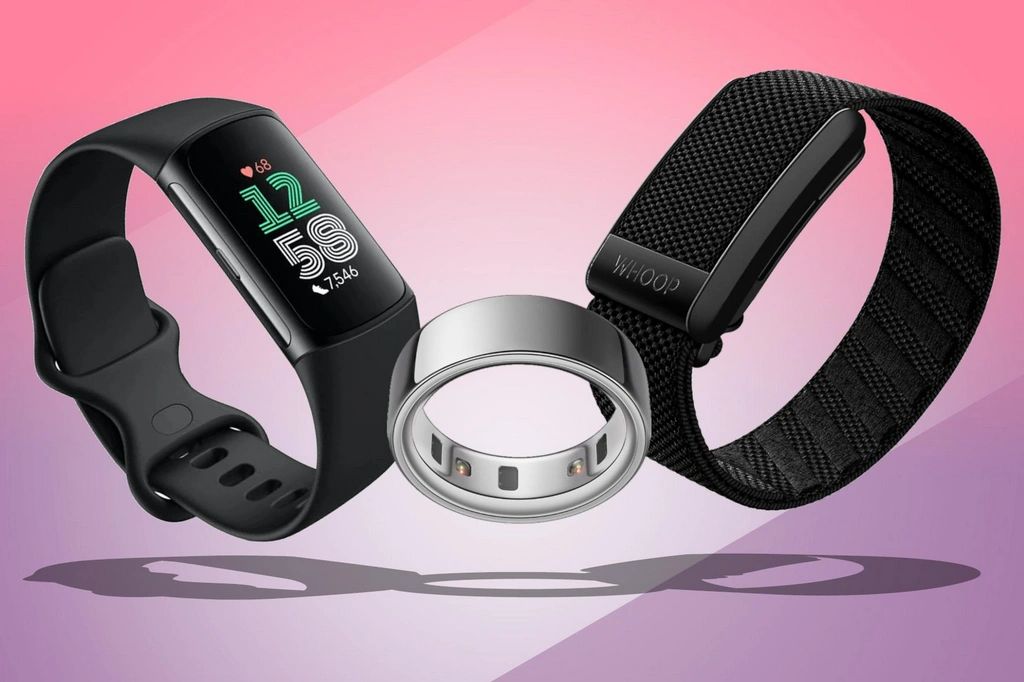
Pole Fitness and Fitness Trackers: Now the Data...
Science IS paying attention to poler needs and making plans for pole fitness
But...it won't be soon.
2026 Saw several Science projects on the pole fitness industry. Say what you will about it being deemed a sport pros & cons, the industry has been starved for information about the extended benefits that most polers have just “know” without data to back them up. Legitimizing us has helped so much in getting the word out!. The following article review might be helpful to all polers both new to the fitness practice and art and those of us who have know some things about it
Polers know: There isn’t a way to TRACK your pole work-outs accurately, but you can glean some information from them or just forget it all together. So what did a group of researchers find out from polers? Here it is.
Kouaho, W. J., & Epstein, D. A. (2026, April). Unpacking How Pole Dancers Come to Experience the Use of Fitness Trackers. In Proceedings of the 2026 CHI Conference on Human Factors in Computing Systems (pp. 1-16).Google Scholar look up is as follows:https://dl.acm.org/doi/10.1145/3772318.379041
It's a good read but here's what I saw and identified with...
Humans in general don’t do much without monitoring ourselves these days. It is causing a lot of stress in the world, but that is for another post. Generally Polers skip it but, not all do, so I thought this was a good take on how many polers approach self tacking in generally. There are so many things to track these days to take care of our health but... What works in a pole athlete? Loved this article because it did give me some great ideas!
Things I tracked as of the last 7 years:
How many steps, what cardiac zone we are in & for how long, what nutrients do we need to support a healthy body, sleep hours(we must not get on the pole with no sleep...) are a few of the things we track.
In pole fitness, it can get very confusing. I will do one on the deal of "if you haven't slept don't get on the pole" at a later date. That one was hard for me since after ovaries act up sleep can be a crap shoot!
Anyway... This article was about polers perspectives on how to come up with something that works using actual fitness devices. As the Polers and other aerial practitioners are just out of luck with tracking, they wanted to see what we needed.
Humans in general don’t do much without monitoring ourselves these days. How many steps, what cardiac zone we are in & for how long, what nutrients do we need to support a healthy body and sleep hours are a few of the things we track. In pole it can get very confusing. This article was about polers perspectives on how to come up with something that works. As the Polers and other aerial practitioners are just out of luck with tracking, they wanted to see what we needed.
The questions they wanted answered to start narrowing down device needs
How do polers personally define movement for pole?
What are the participants perspectives on the (physical) us of tracking devices while poling?
What are poler reactions to data that can be obtained from wearables in relation to pole dancing?
The article is very well done at these points: in literature review , Which looks like they "found" what I have found- a bunch of nada on physical function related to tracking the category of fitness that might work on a fitness tracker.
Oh they did find what is on the internet and there are a few scattered recent studies from around the world on muscles and categorizations but no more than 2 per topic (women have too many variables!) There is a plethora of data from gender studies genres, feminist opinions (loudly a no in the early years), "stigma" and emotional/mental women's data research but, not much on the physiological data.
Since one pole move can use over 267 muscle ligament complexes it’s pretty overwhelming to isolate.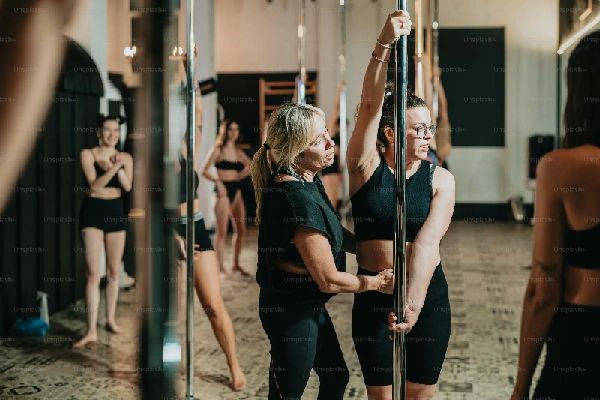
The Study:
Method used: 20 practitioners and instructors were engaged in flexible conversations that were semi structured to pertain to larger topics 1) General Pole dancing fitness class work-outs &2) Fitness tracking.
Who did they ask?
A great demographic chart is included and shows multiple ethnicities of women from a wide range of ages (other than 60 of course). Each shows experience with 2 to 13 years in the Pole fitness industry. Only 3 were full-time instructors, and it is mentioned that the primary occupation of the participants were college degree occupations. This is pointed out as a possible bias as the higher education demographic has more experience with data tracking. The researchers kept this in mind, and they were concerned about a possible non-generalized bias towards tracking devices due to this.
The brand of trackers noted that the women used are on the demographic page with their occupations and years of pole experience They included Fitbit, Garmin, whoop and rings.
What did they find
1) How do polers personally define movement for pole?
Pole is highly variable and complex with many subcategories such as: Aerial pole, artistic pole, low flow, chair etc.
All instructors explained “core pole” which is the basic intro to pole class/course, that we go through before broadening to other areas and leveling up. The foundational techniques include gripping, squeezing and climbing and grip points were discussed.
I found the complex discussion of a pole move pretty accurate. It isn’t just pull & engage a muscle, it isn’t balance or strength only either, but about 100 things a poler learns to do. They do underline the need for STRENGTH building to progress to the multiple other factors that polers know as "pole dancing". I really enjoyed the varied descriptions in writing. They did a great job in trying to capture what we are doing when learning, progressing and performing.
Noteworthy comments:
I like the general classification of what they called “deep somatic engagement”. The awareness that develops “the feel of the thing”we are doing. They identify that “feel” as the primary aspect of poling.
They discussed trying to embody(to actually DO) what an instructors' description verbally is, the number of times it takes to get each body part just right, and the intuition that comes with the repetition of exploring the moves. Beautifully put and obvious why you can’t really track it or define what we do.
They discussed how we actually feel from day to day/session to session which is based on our lives . Flexibility changes, mood changes, focus ability and self awareness changes making physical engagement different as well. Excellent descriptions.
It was also pointed out that the development of growing into the somatic engagement that allows the change (leveling up we call it) manifests (happens) is not widely translatable.
I think that is something hard for all polers to practice: Polers can NOT compare themselves to another human ever. We all have a hard time not “tracking” and measuring ourselves with others in society. It is one of the things I personally love about pole that I have been taught to stop it and my coach can LOOK at me and KNOW I'm doing it !
I can not compete with another, even in a competition! I am competing and growing my skill and somatic awareness. It happens completely on its own time, when my body and mind make the connection and not before!
Personal Experience:
I DO gauge my pole movement & growth through a goal list that my coach & I run on a 3-4 month time frame. I may be introduced to about 1-3 new moves per week. Many of them condition me for ‘what's coming next in my pole journey”. I loved this idea of the internal “deep somatic engagement”. I may be training for one thing in that quarter and I don't complete it but like magic, I become able to do other things that show up in odd ways. I may be working on a fan kick or flare combination and never get the engagement quite smoothed out, but suddenly a floor scorpion off of a shoulder roll sequence just happens. My grip changes and weight shifts on the pole in a combo becomes effortless, its soooo flipping weird how pole works!. My spine rotation and psoas development was silent, and I didn't "feel like" I'm making progress. Then BAM! It is shocking when it happens and so gratifying that the work I put in IS working. Pole truly is magical!
I really like the “deep somatic engagement” idea in a HUGE way. Pole dance movement is not linear as in “I can do all the skills for level 1”. It is about endurance of full body muscle engagements held over a short interval (HIIT), headspace to be 'loose enough' to move without being guarded (fear, mood, active flexibility). It’s about continuous movement without stopping and monitoring my heart rate to signal me to slow down or speed up(cardiac zones)…. Furthermore, it is getting in touch with my full human experience in PLAYING. Yeah, that’s hard to track isn’t it!
Question 2
First response up for this one was - "We don’t wear jewelry for the pole safety and our own safety. "
Most felt the hindrance to grip and the multiple muscle groups movement (counterbalancing) with a device on, interfered with fluidity, some felt the beautiful "line of the arm" defeated the purpose of working on the “body line”. Great input! I had never thought about the appearance of the body cut off by the band before.
Side note: Many internet references I checked recommend a chest band and my personal experience revealed that the constant lat movement and torsion changes of the spin made this pretty much impossible to keep out of the way and in place.
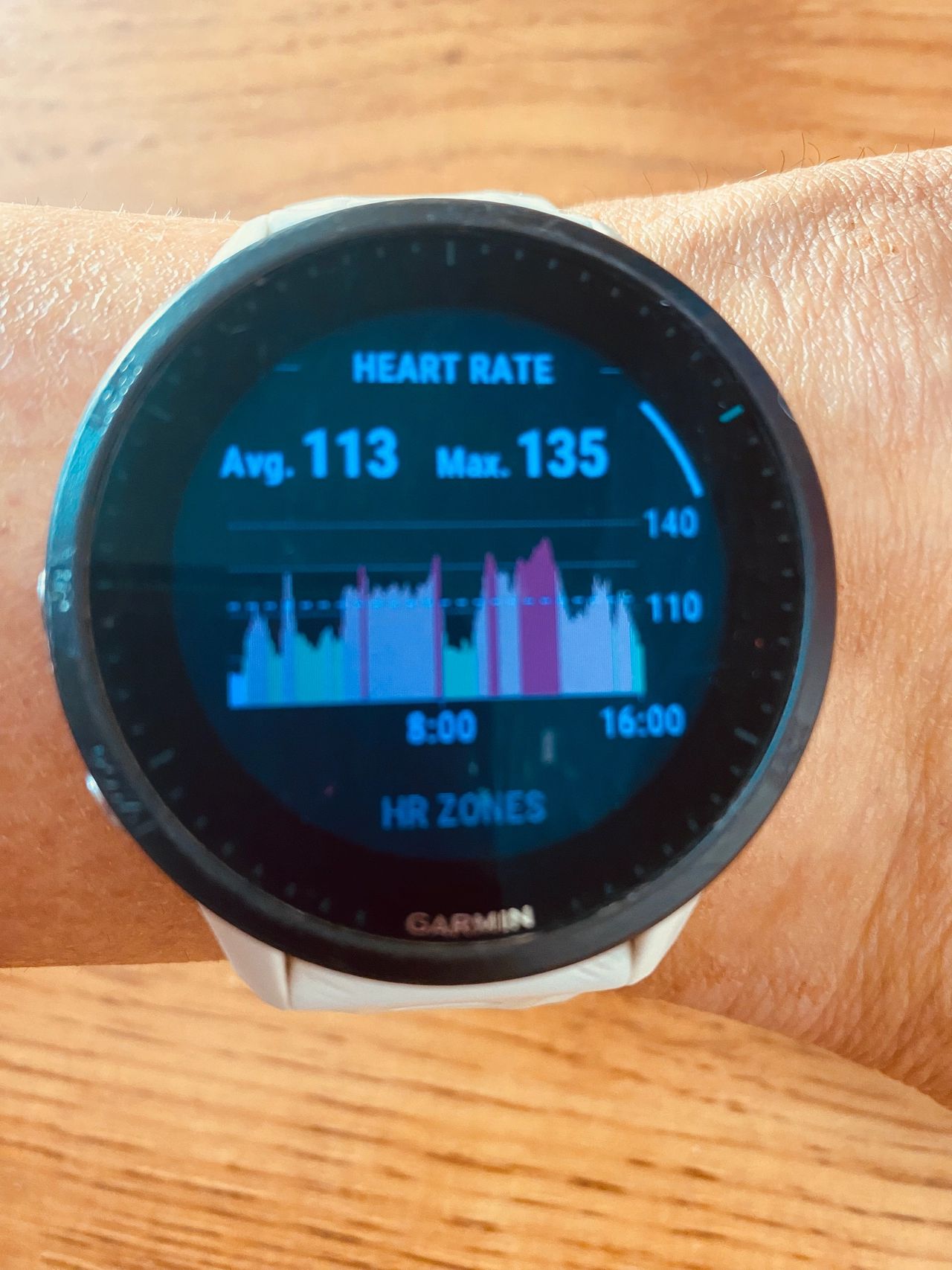
A Garmin during a 60 min pole fitness session : A descent into sneaky V
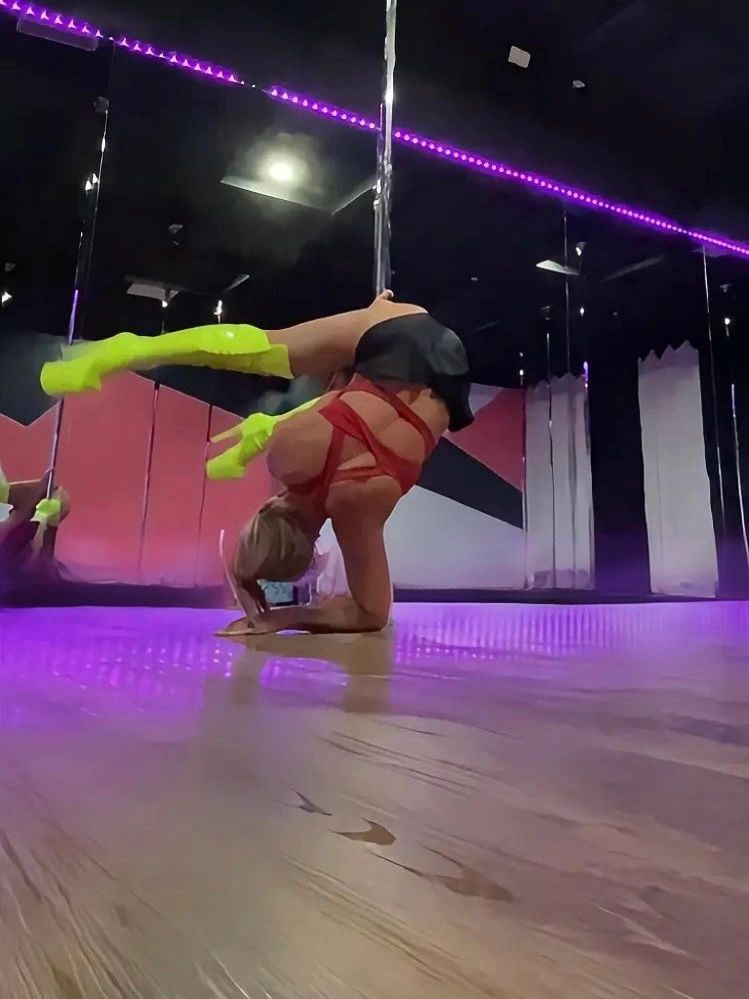
Photo: Great example of asymmetric intensity, decent and exit muscle group engagements talked about in the article!
What else did they notice?
Difficulties for those who wear them:
Wearing specific bands even rubber causing grip slips and catches.
Removing the trackers for more difficult on the pole moves especially at the advanced levels.
One noted the slight changes in grip or body movement when trying to train both sides for symmetrical engagements and growth
Wearing it only to control choreography music during instruction to limit back & forth walking time to the controls.
The basic idea presented is that pole can be “intangible”. What is the point of wearing it when it is so much MORE than one thing? I do agree to a point, so I like the next section tremendously.
So what is it they said to be the most difficult thing to track both as dancers and as a scientist?:
“The most intangible tracking point is the "central flexibility of the exercise”. Yep, that’s a good call.
Question 3:What data is actually useful?
Activity mode - doesn’t match anything even the dance modes of some devices, and polers use “work-rounds”... for what they are interested in seeing as a poler/pole athlete. Some felt that pole was highly strength based so they used strength modes. Others were more interested in cardiac zones. Others do try the dance modes but, felt nothing truly captured the strength of climbing, and the intensity of holding a pose, then... transitioning to another move and so on. Some used a generic or sport mode and there is a Circus Arts mod on a Whoop device. They felt it does pick up the strength but does NOT translate any information on the dance portion of pole.
Personal experience:
I’ve had a cheapo Amazon watch, a Fitbit and a very expensive top of the line Garmin, (trying to figure out how to capture my pole practice was a trip!) I learned FIRST HAND about over-training within about 3 months, so I knew I needed a "warning sign" or something signal me to "DON'T overdo it (it was just too fun!).
So I started the tracking the journey, just by having it record the classes/practice, and then I watched it over about 2-3 weeks, to see if there were any patterns. It did pick up my cardiac zone's but, when I would check my HR during class... it was never correct (either too high or too low). None of the devices ever "kicked over" or went into "automatic mode" (They never even noticed I was doing something- I had/have to turn them ON).
The lately dropped upgrades my Fitbit will auto pick up I'm "spinning"...(but I'm pretty sure it means BIKE). Honestly my 1st thought is always: "How does it KNOW I'm on spin pole?!", yeah - no....
Things I’ve tried: 1) Do pole in different modes: lifting, yoga, dance, aerobics. My watch currently picks up spinning - why I have no idea! 2) Lately, I just use sport as that is the default now. 3) I wear tight sports bras and my Garmin did get stuck on the pole especially in pole “tumble moves” so I wore it in my bra, and it worked great for zone tracking. 4) Wearing it on my ankle, IF I’m in boots, it does work for me but again, it’s just for cardiac zone minutes and some warnings... Here is why:
I am 64, and I am very enthusiastic on that pole and can overtrain or get a "repetitive use" strain fast..... If I’m up on the pole doing too many combos, for to long, the device does BUZZ me, when I’m hitting a PEAK HR zone so I can know to adjust effort, my breath work and notice the effort I am applying at the moment, or within the hour. This can be helpful at times especially when training for competition when I push too hard.
Question 3 Conclusions
Basically trackers are just incompatible as the functions of pole sport/dance do not translate well, even in conditioning classes there are dynamic stretches and static stretches. SO again that's like taking yoga while running a marathon - not trackable.
The article example explains static versus dynamic stretching as follows: "the HR is closer to the resting HR during static and, the dynamic stretching element elevates the HR gradually over time"...can't categorize such a thing.
 A Pole fitness session
Fitbit during a Choreography class after 6 yrs in a 60 yr old. Nice steady work-out.
What Did the Study say:
Personal experience:or conditioning according to the dancers was: the trackers can NOT track the intensity of the activity.
I'm "shaking and sweating from the work-out and the device says not working out at all!"."
Hanging upside down, transitioning from one to the other and, the instructors report their HR never moves, but they are exerting themselves.
The pole trick, coming down to floor and back up again…"the device doesn’t recognize the floor part"
The trackers don’t pick up the muscle fatigue that occurs from repetitive movements...one day to the next, it can’t be seen, it is felt by the person. Great ANSWER!
So what do polers actually USE trackers for
Logging the workouts that they did
Being sure they ARE moving so they can plan further “work-out loads” and/or over training personal identifiers. (This is how I use them)
Knowing when rest days are imperative so they make time for it. - Yep
Tracking how their HR’s decrease over time as fitness sets in, especially for a competition routine training.
Example given “I’m in zone 5 my entire routine but after a month I’m doing it fairly smoothly in zone 3 or 2. That tells me my body is more capable…”.
I do have that experience watching my zones. In the beginning of training a move it is intense, I do have some fear, some frustration and since I am conditioning I am using more exertion to find the "grip pockets" and engagement sequence. After a month or so 2 things can happen: a) I overtrain & my HR goes up faster (it should be a gradual increase) or b) My HR doesn't go up for a whole hour which means I need to increase my efforts by learning a new move, entrance or exit!.
I should also mention that because of my age my LACTATE per HR level MUST stay below 124 for an extended 60-minute pole fitness session, or I am at risk of muscle burn. After coming out of sarcopenia, that is a big deal, and we avoid that like the plague. My HITT hard sessions are kept to no more than 40-50 minutes. Again, I am super enthusiastic with "BUT I WANNA DO ALL THE THINGS!!!" And I can go to failure without realizing it, so I must pace myself carefully for sustaining the pole life-style.
Discussion points
Pole is extremely complex (hmm, yeah we know)
Trackers can not pick up intensity nor actual “FLOW” which is part of the activity acceding/descending, the multiple ways to do a pirouette...
Polers operate on the vertical and horizontal plane and are not on the ground in a steady way. This they classified tracker wise as “sensing zones of plurality”. Fancy!
Skin is part of grip and effort (finally someone says it in this article!)
The wrist is the worst place for a tracker due to the types of interference for the device and the poler.
Training “both sides” skews data as the human ASYMMETRY of effort and muscle growth as well as the “below the waist/above the waist” efforts are not equal, and can’t be tracked
Trackers are not able to tract “power” as in the intrinsic generated power of the full core and trunk. Interesting as yes the full engagement of a beginner to an advanced dancer changes with skill
FEELING as expressed by polers is “central because it is an artistic discipline which predicts movement…”
Other factors include menstrual cycle metabolic changes, hormone levels and bruising of the skin - yep.
Article conclusion and hope for the future
A suggested "further research cal" was recommended. They note there was for more involved movement with similar gymnastics athletes that could be used in monitoring, as well as "monitoring manual labor actives" including dishwashers or construction workers to try and capture core utilization information for developing a new type(s) of devices.
I really like this conclusion: Studying Rock-climbing athletes was mentioned because of the impact of “vertical movement" and gravity factor that is a part of pole sport. (Great idea! ) I had never considered that gravity factor, other than it introduces me to the crash matt frequently! HA!
Opinion on this Article:
Over all, this was a Great article and I hope you go and find it! It was a refreshing take on what we do at any level of pole sport or dancing. It describes all the different aspects of pole sport/dance and the effects on the body and how many factors there are involved over all. It truly covered the complexity of the sport from multiple angles . This gives researchers an excellent starting base for information as we move forward in the pole industry to get some gear we could actually use.
One thing that might have been interesting to include is, the FACT that pole athletes burn macro-nutrients/calories at a differing rate than other athletes.... because of the combines aerobic/anaerobic/HIIT quality/variability of the activity.
While I use a DEXA scan to calculate muscle mass for my optimum intake of protein/carbs & fat intake, many polers do use the calorie tracking features but again, not really discussed at length here. Since I know that the devices are not accurately monitoring my muscle intensity, for me, I would be in a severe calorie deficit and loosing MUSCLE if I followed the information on the devices I've had.
Based on my muscle mas gain and the DEXA scans I would be in a 500calorie per day deficit! I have yet to find information on this but, will post when I find one. Right now I use the professional athletes females in soccer players for a guide, for intake and protein/carb ratios when considering nutrition for pole. They have the best documentation on females across the life span that I can find.
Side note: I do have blog coming up where testing on the polers muscles was done using a monitor attached TO THE POLE to measure dynamic movement and one with monitors attached to thier core! Maybe these guys should get together!
Good Grip my friends:
Maze Prince | JUL 10, 2026
Share this blog post



© 2026 Mage Flow Pole & Fitness LLC